
Non-alcoholic drink terms explained
Why the labels can be confusing
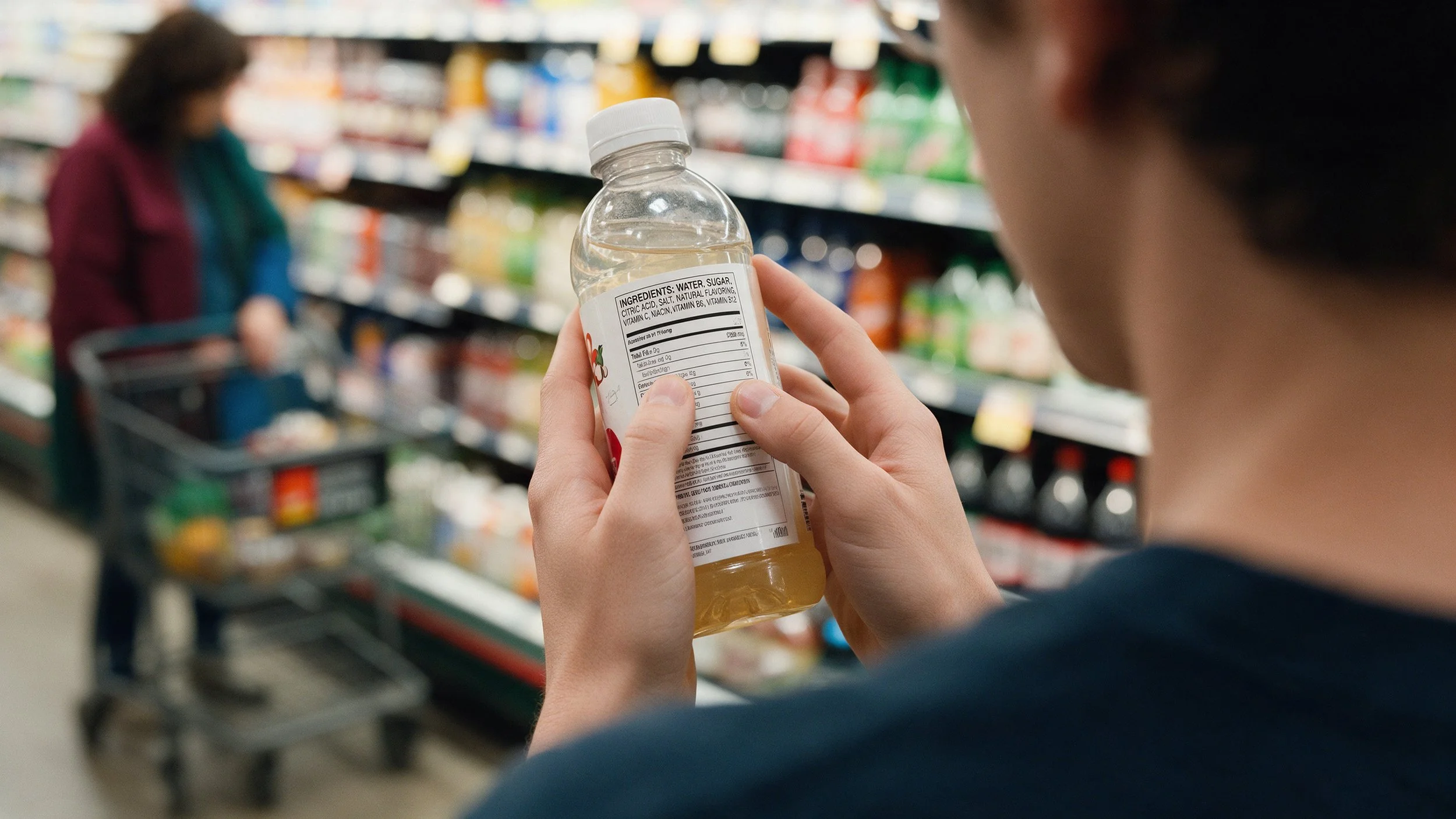
The words on a non-alcoholic drink do not mean the same thing everywhere. “Alcohol-free” means 0.05% ABV or less in the UK, but up to 0.5% on wine sold in the EU. The ABV figure on the label always tells you more than the words do.
ABV (alcohol by volume) is the percentage of a drink that is alcohol. A typical lager is around 4–5%; everything on this page sits at or below about 1.2%.
Spot the decimal. 0.05% and 0.5% look alike, but one is ten times the other. Both are very low, yet they often decide which word a drink is allowed to use.
The common terms
Most labels use one of these words. The limits shown vary by country; the next section gives each region's rules.
| Term | What it usually means |
|---|---|
| 0.0% | No measurable alcohol. In practice 0.05% ABV or less, the limit EU wine law sets for “0.0%”. |
| Alcohol-free | Little or no alcohol. 0.05% or less in the UK, under 0.05% in Canada, up to 0.5% on EU wine, and no alcohol at all in the US. |
| Non-alcoholic | Under 0.5% in the US, under 0.05% in Canada. UK guidance says not to pair it with the name of an alcoholic drink, such as beer or wine. |
| De-alcoholised (US and Canada: dealcoholized) | Made as a normal beer, wine or spirit, then the alcohol is taken out. It describes how the drink is made. UK limit: 0.5% or less. |
| Alcohol-removed | US wording for wine under 0.5% that is not completely alcohol-free. |
| Low alcohol | Some alcohol, but well below the usual strength: up to 1.2% in the UK, under 1.15% in Australia and New Zealand, under 1.1% in Canada, under 2.5% for US beer. |
| Reduced alcohol or partially de-alcoholised | Some alcohol removed, but still above 0.5%. For EU wine, it must be at least 30% below the normal minimum strength for that type of wine. |
| Light / lite | Usually lower in alcohol than the standard version. Rarely defined, so check the ABV. |
Words you will see on shelves and menus
These are everyday terms, not legal definitions, so they say nothing exact about alcohol content.
NoLo / Low & No: trade shorthand for the whole no- and low-alcohol category.
Zero-proof: a drink with no alcohol, mostly used for cocktails and spirit alternatives; common in North America.
Spirit alternative / non-alcoholic spirit: a botanical or distilled drink made to be used like gin, rum or whisky, without taking their protected names.
Proxy: a drink built from juices, teas, botanicals or ferments to stand in for wine, rather than a wine with the alcohol taken out.
Mocktail / alcohol-free cocktail: a mixed drink with no spirit. If you need zero alcohol, ask what goes in it, as some bitters and syrups contain alcohol.
Mindful drinking / sober curious: ways of describing people who choose to drink less or not at all. They describe a lifestyle, not a product.
Region by region
The UK and Canada are the strictest about “alcohol-free” (0.05%); most other markets draw the line at 0.5%. All figures are ABV.
| Alcohol-free | Non-alcoholic | De-alcoholised | Low alcohol | |
|---|---|---|---|---|
| UK | 0.05% | – | 0.5% | 1.2% |
| EU | 0.5%* | varies | – | varies |
| US | 0.0% | 0.5% | 0.5% | 2.5% |
| Canada | 0.05% | 0.05% | 1.1% | 1.1% |
| Australia & NZ | 0.0% | 0.0% | – | 1.15% |
* Wine. For beer, each EU country sets its own limit, usually 0.5%. – = no set limit, or the term isn’t normally used.
Japan: drinks under 1% ABV don’t count as alcohol, so always check the label.
One drink, many labels
Take one de-alcoholised lager at 0.4% ABV. Without changing a drop, it needs different words in each market.
| Where it is sold | It can be called | It should not be called |
|---|---|---|
| UK | De-alcoholised, or low alcohol | Alcohol-free (it is above 0.05%) |
| EU (e.g. Germany) | Alcohol-free | – |
| US | Non-alcoholic, with “contains less than 0.5% alcohol by volume” | Alcohol-free (it is not 0.0%) |
| Canada | Dealcoholized, or low alcohol | Non-alcoholic or alcohol-free (both need under 0.05%) |
| Australia & NZ | Low alcohol, or non-alcoholic with “less than 0.5%” beside it | Non-alcoholic on its own |
| Japan | A beer-taste drink | Beer |
The same lager taken down to 0.0% could be called alcohol-free in every one of these markets.
This page is correct as of 9 November 2026. The UK is still reviewing its “alcohol-free” limit, and EU wine labels change by September 2027. This is general information, not legal advice; producers should check with the regulator in each market.Need zero alcohol? Look for 0.0%
Look for 0.0% on the label, or “alcohol-free” on a UK or Canadian product. “Non-alcoholic” and “de-alcoholised” can mean up to 0.5%, and Canadian “dealcoholized” up to 1.1%. If you are pregnant, taking medication, in recovery or avoiding alcohol for religious reasons, check the ABV and ask a doctor or pharmacist if unsure.